
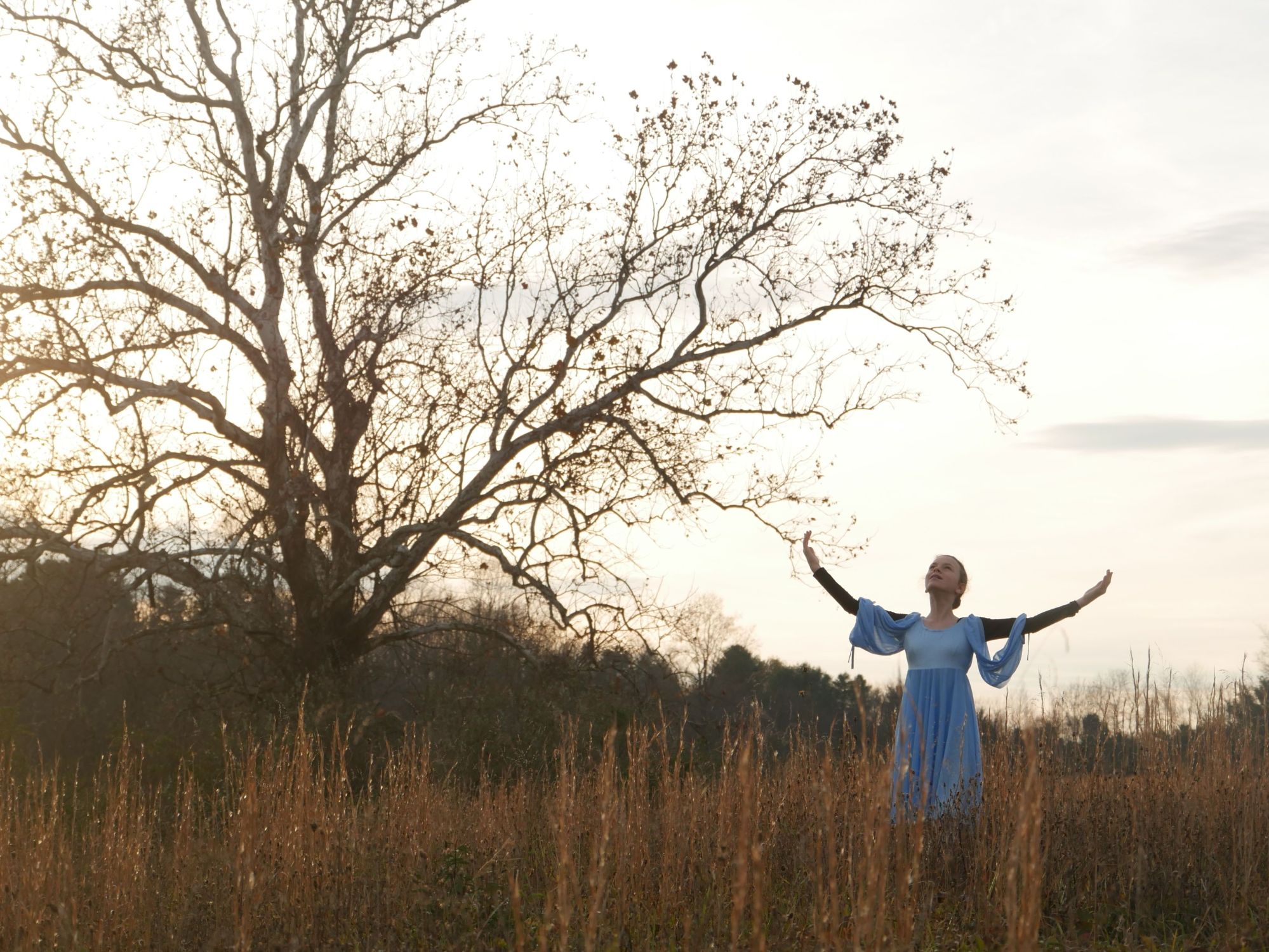
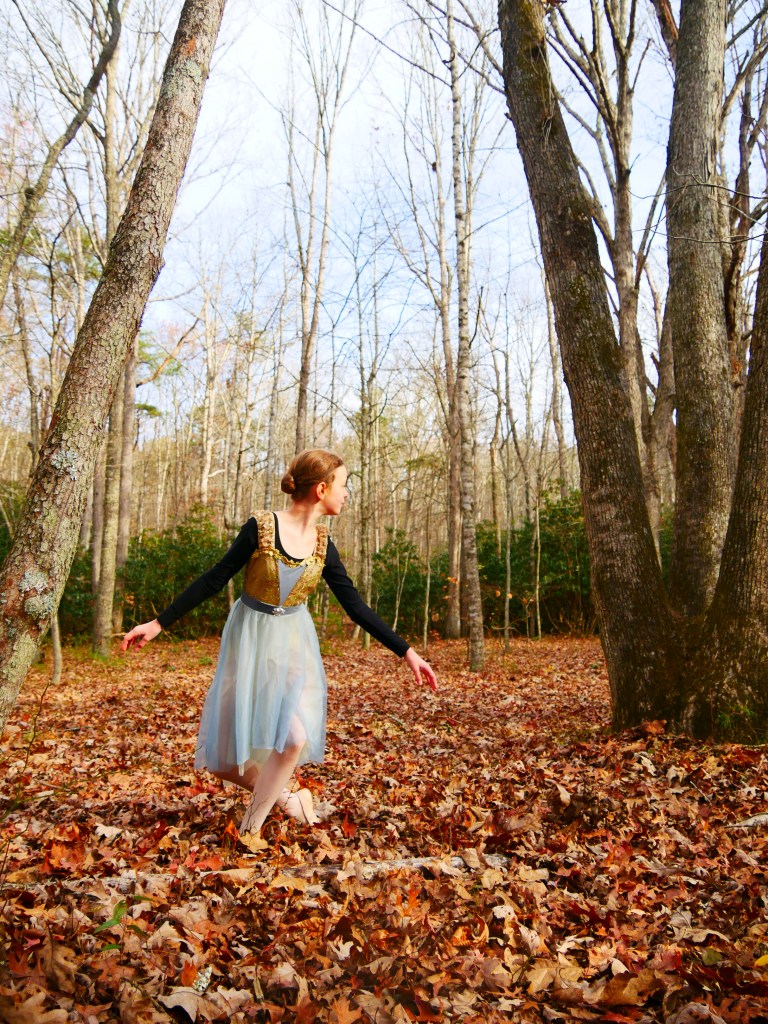
In the middle of a busy day at the studio, with merry laughter and conversation drifting around me, I sometimes pause for a moment and marvel at the culture that God has created at Westover Ballet. What is it, over the last decade and a half, that has fostered such a rich environment of friendship, enthusiasm, and joy? One influence stands out to me strongly: The Sense of Wonder – the ability to marvel at the beauty of God’s creation and be inspired. Whether it’s the JOY dancers frolicking through forest and fields in the land of imagination, or our senior dancers training their bodies to speak and sing the language of dance, everything we do is infused with the joy of discovery.
I was raised to value a sense of wonder. Around the time I began teaching ballet, my mother introduced me to a book that had inspired her when she was raising me. Looking back now, I realize that its wisdom has influenced my decisions over the years and played a big role in making Westover Ballet what it is.
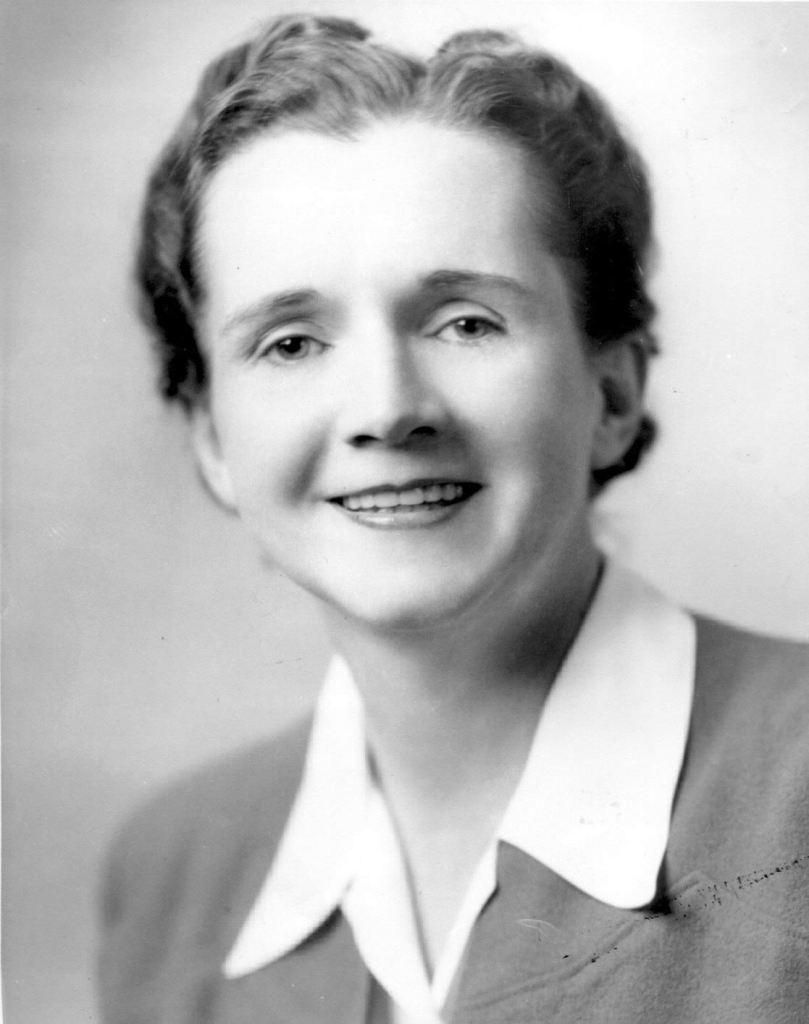
Here, now, are a few thoughts from Rachel Carson’s book, The Sense of Wonder. I hope they inspire you to live a joyful life of discovery, as they have for me!
From The Sense of Wonder by Rachel Carson:
“One stormy autumn night when my nephew Roger was about twenty months old I wrapped him in a blanket and carried him down to the beach in the rainy darkness. Out there, just at the edge of where-we-couldn’t-see, big waves were thundering in, dimly seen white shapes that boomed and shouted and threw great handfuls of froth at us. Together we laughed for pure joy – he a baby meeting for the first time the wild tumult of Oceanus, I with the salt of half a lifetime of sea love in me. But I think we felt the same spine-tingling response to the vast, roaring ocean and the wild night around us.”
“A child’s world is fresh and new and beautiful, full of wonder and excitement . . . If a child is to keep alive his inborn sense of wonder . . . he needs the companionship of at least one adult who can share it, rediscovering with him the joy, excitement and mystery of the world we live in.”
Rachel Carson, A Sense of Wonder
“I spend the summer months on the coast of Maine, where I have my own shoreline and my own small tract of woodland. Bayberry and juniper and huckleberry begin at the very edge of the granite rim of shore, and where the land slopes upward from the bay in a wooded knoll the air becomes fragrant with spruce and balsam. . . When Roger has visited me in Maine and we have walked in these woods I have made no conscious effort to name plants or animals nor to explain to him, but have just expressed my own pleasure in what we see, calling his attention to this or that but only as I would share discoveries with an older person. Later I have been amazed at the way names stick in his mind, for when I show color slides of my woods plants it is Roger who can identify them. ‘Oh, that’s what Rachel likes – that’s bunchberry!’ Or, ‘That’s Jumer (juniper) but you can’t eat those green berries – they are for the squirrels.’ I am sure no amount of drill would have implanted the names so firmly as just going through the woods in the spirit of two friends on an expedition of exciting discovery.
A child’s world is fresh and new and beautiful, full of wonder and excitement. It is our misfortune that for most of us that clear-eyed vision, that true instinct for what is beautiful and awe-inspiring, is dimmed and even lost before we reach adulthood. If I had influence with the good fairy . . . I should ask that her gift to each child in the world be a sense of wonder so indestructible that it would last throughout life, as an unfailing antidote against the boredom and disenchantments of later years, the sterile preoccupation with things that are artificial, the alienation from the sources of our strength.
If a child is to keep alive his inborn sense of wonder without any such gift from the fairies, he needs the companionship of at least one adult who can share it, rediscovering with him the joy, excitement, and mystery of the world we live in.”
One way to open your eyes is to ask yourself, “What if I had never seen this before? What if I knew I would never see it again?”
— Rachel Carson
 Westover Ballet